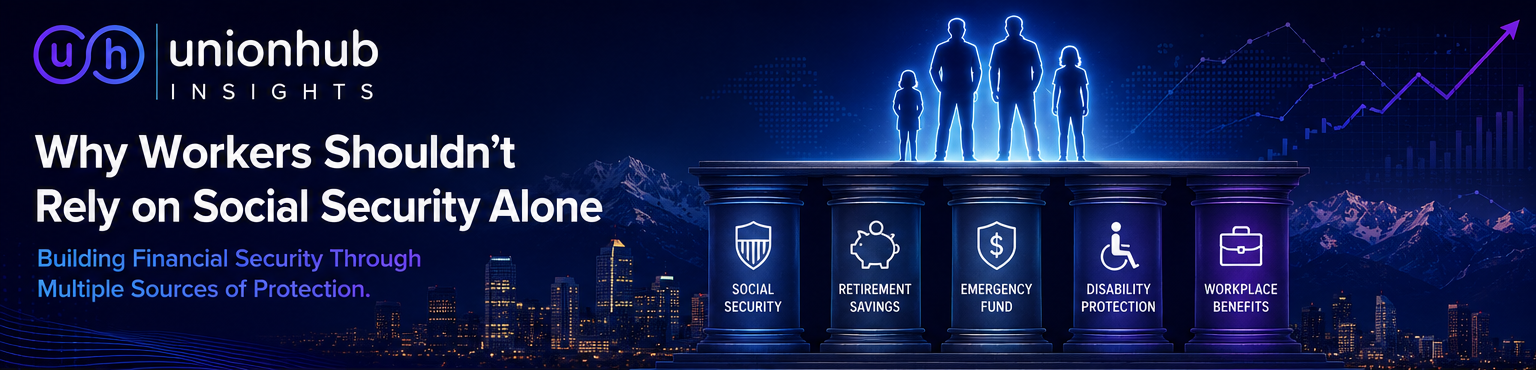
For nearly 90 years, Social Security has served as one of the foundations of financial security in the United States.
Millions of retirees depend on Social Security benefits for income during retirement. Workers who become disabled may also receive benefits through Social Security Disability Insurance (SSDI). For many families, these programs provide an essential financial safety net.
But as discussions about Social Security’s future continue, an important question is emerging:
Should workers rely on Social Security alone when planning for retirement and income protection?
Increasingly, the answer appears to be no.
Social Security Isn’t Disappearing—But It Is Facing Challenges
Let’s start with an important fact: Social Security is not expected to disappear.
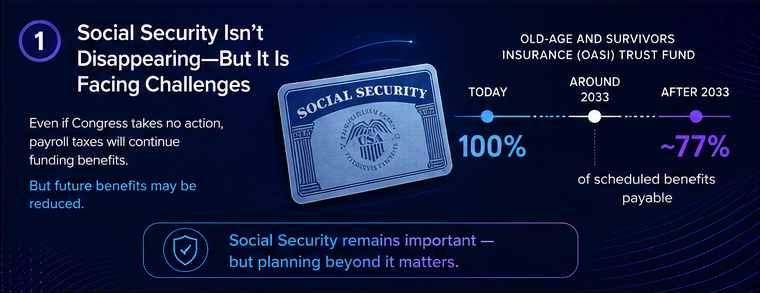
Even if Congress takes no action, payroll taxes will continue flowing into the system, providing ongoing funding for benefits. However, according to projections from the Social Security Trustees, the retirement trust fund faces long-term funding challenges that could affect future benefit levels.
Current projections indicate that the Old-Age and Survivors Insurance (OASI) Trust Fund could exhaust its reserves around 2033. If no legislative changes occur before then, incoming revenue would be sufficient to pay approximately 77% of scheduled benefits.
In other words, Social Security is not projected to go bankrupt. But future benefits may not fully match what current law promises today.
Why the System Is Under Pressure
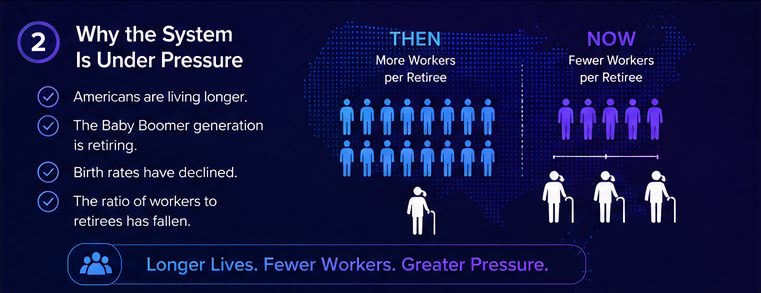
The challenge is largely demographic: Social Security operates primarily on a pay-as-you-go system. Today’s workers fund benefits for today’s retirees through payroll taxes. Several long-term trends have increased pressure on the system:
- Americans are living longer.
- The Baby Boomer generation is retiring.
- Birth rates have declined.
- The ratio of workers to retirees has fallen.
As fewer workers support a growing retiree population, the financial strain on the system increases. These challenges have been discussed by policymakers and economists for decades, but the projected funding gap is moving closer.
The Risk Isn’t Just Retirement
Most conversations about Social Security focus on retirement income. But Social Security also plays an important role in disability protection.
Workers who become unable to work due to qualifying disabilities may be eligible for SSDI benefits. However, eligibility standards are strict, approval can take time, and benefits are generally designed to provide foundational support rather than fully replace a worker’s income.
For many households, relying solely on government programs may leave significant gaps between expected income and actual financial needs.
The Retirement Planning Mistake Many Workers Make
One of the biggest financial planning mistakes is assuming that Social Security alone will provide sufficient retirement income. Historically, Social Security was never intended to be a worker’s only source of retirement income.
Instead, it was designed to complement personal savings, pensions, and employer-sponsored retirement plans. Yet many Americans continue to save less than they believe they will need for retirement.
At the same time, uncertainty surrounding future Social Security benefits has increased concerns among younger generations about what retirement may look like decades from now.
Building a More Resilient Financial Future
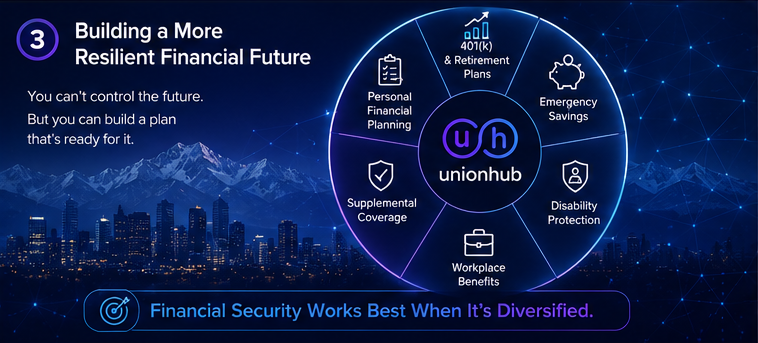
Workers cannot control future legislation or demographic trends. They can, however, take steps to strengthen their own financial security.
That may include:
- Contributing regularly to a 401(k) or other retirement plan
- Taking advantage of employer matching contributions
- Building emergency savings
- Diversifying retirement income sources
- Reviewing disability protection options
- Understanding workplace benefits and supplemental coverage
The goal is not to replace Social Security. The goal is to avoid becoming overly dependent on any single source of income.
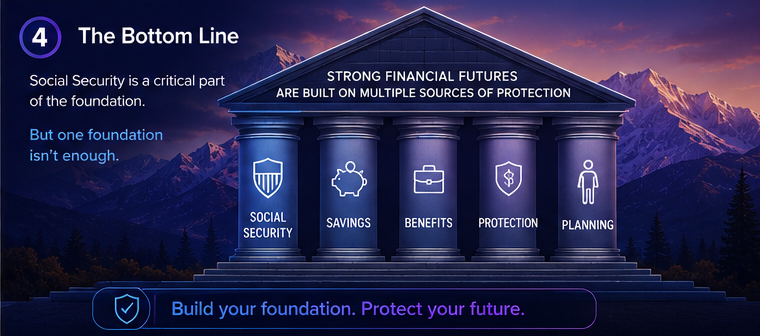
The Bottom Line
Social Security remains one of the most important programs in America and will likely continue to play a critical role in supporting retirees and disabled workers for generations to come.
However, government projections make one thing clear: workers should not assume that future benefits will automatically provide all the income they need. The strongest financial plans are built on multiple sources of protection. Retirement savings. Emergency funds. Income protection. Workplace benefits. Personal financial planning.
Social Security can be an important part of that foundation. But for today’s workers, it should not be the entire foundation.
Further Reading and Sources for this Article
- Social Security Trustees Report: https://www.ssa.gov/oact/tr/
- Social Security Administration (Retirement): https://www.ssa.gov/retirement
- Social Security Disability Insurance: https://www.ssa.gov/disability
- Congressional Research Service Social Security Reports: https://crsreports.congress.gov
- Center for Retirement Research at Boston College: https://crr.bc.edu
- Employee Benefit Research Institute (EBRI): https://www.ebri.org