Most people understand that a serious illness can affect their health.
What many don’t fully appreciate is how quickly it can affect their finances.
When workers think about the financial impact of a medical event, they often focus on hospital bills and healthcare expenses. While those costs can be significant, they are often only part of the story.
The reality is that a single health event can create a ripple effect that touches nearly every aspect of a family’s financial life.
Years of progress toward important goals can suddenly face unexpected challenges.
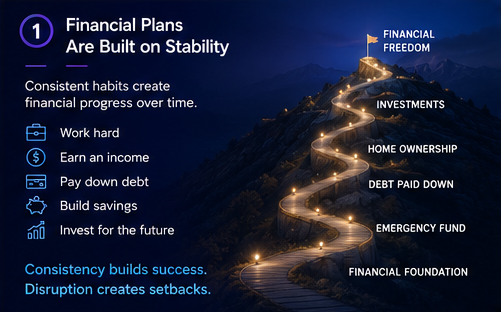
Financial Plans Are Built on Stability
Most financial plans follow a familiar path.
Work hard. Earn an income. Pay down debt. Build savings. Invest for the future.
Over time, these consistent habits create financial progress.
A growing emergency fund. A retirement account that steadily increases. A mortgage balance that shrinks. A college savings plan that expands year after year.
Financial success is rarely built overnight.
It’s built through consistency.
That’s why an unexpected disruption can have such a significant impact.
The Costs People Don’t See Coming
When a serious illness occurs, most attention naturally focuses on medical treatment and recovery.
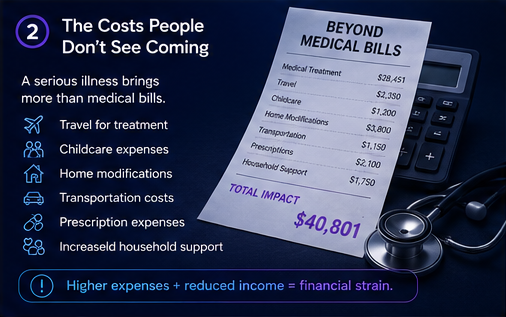
But many families quickly discover that healthcare costs are only one piece of a much larger financial picture.
Additional expenses may include:
- Travel for treatment
- Childcare expenses
- Home modifications
- Transportation costs
- Prescription expenses
- Increased household support
At the same time, income may decrease if a worker is unable to perform their job during treatment or recovery.
The combination of higher expenses and reduced income can place tremendous pressure on a household budget.
Progress Can Quickly Turn Into Setbacks
Imagine a worker who has spent years building financial stability.
They’ve created an emergency fund.
They’re contributing to retirement accounts.
They’ve paid down credit card debt.
They’re finally feeling confident about their financial future.
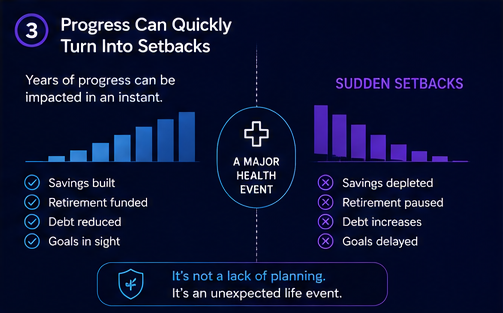
Then a major health event occurs.
Suddenly, savings that took years to accumulate may be used to cover immediate expenses.
Retirement contributions may be paused.
Debt balances may begin to rise again.
Long-term goals are postponed as families focus on immediate needs.
The issue isn’t poor planning.
The issue is that some life events create financial challenges that are difficult to absorb without additional support.
The Emotional Cost Matters Too
Financial setbacks don’t happen in isolation.
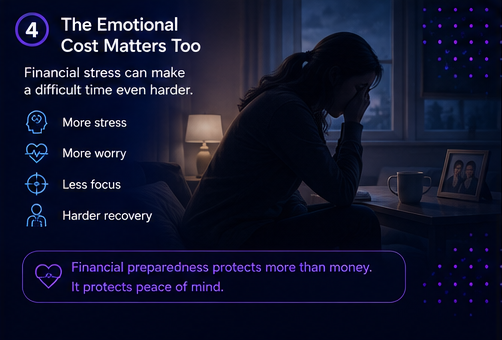
Money concerns often create additional stress during already difficult situations.
Workers recovering from an illness want to focus on healing.
Families want to focus on supporting loved ones.
When financial uncertainty enters the picture, it can make an already challenging experience even harder.
That’s why financial preparedness isn’t just about protecting money.
It’s also about protecting peace of mind.
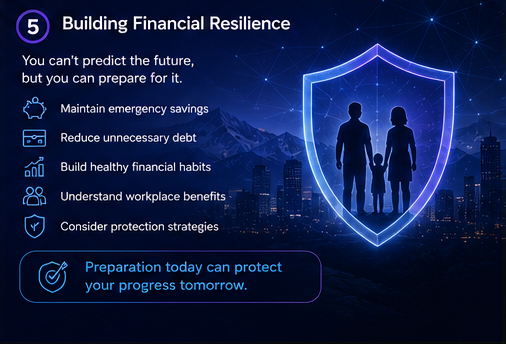
Building Financial Resilience
No one can predict when a health event will occur.
But workers can take steps to prepare for the possibility.
Financial resilience often includes:
- Maintaining emergency savings
- Reducing unnecessary debt
- Building healthy financial habits
- Understanding available workplace benefits
- Considering protection strategies designed for unexpected events
Benefits such as critical illness coverage, disability insurance, and other supplemental protections exist to help address some of the financial challenges that can accompany serious health conditions.
While every worker’s needs are different, preparation can make a meaningful difference when life becomes unpredictable.
The Goal Isn’t Fear. It’s Readiness.
Conversations about illness and financial risk can feel uncomfortable.
No one enjoys imagining worst-case scenarios.
But financial preparedness isn’t about expecting bad things to happen.
It’s about recognizing that unexpected events are part of life and creating a plan that helps protect the progress you’ve worked hard to achieve.
The strongest financial plans don’t simply focus on growth.
They also account for uncertainty.
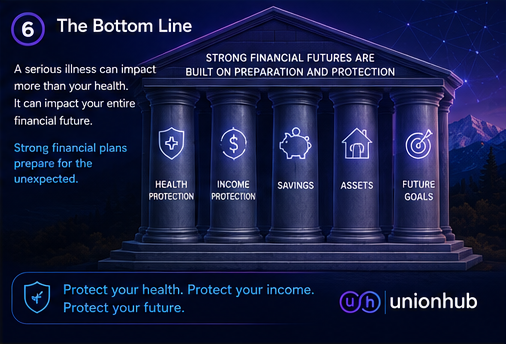
The Bottom Line
Financial progress often takes years to build.
A serious illness can create challenges that extend far beyond medical treatment, affecting income, savings, debt, and long-term goals.
While no one can eliminate every risk, understanding the potential financial impact of a health event is an important step toward building lasting financial resilience.
Because protecting your future isn’t only about growing your wealth.
It’s also about protecting everything you’ve already worked so hard to achieve.